What is the colour change when aqueous iron(II) ions are treated with an acidified solution of dichromate(VI) ?
1 Answer


The colour change is from pale blue/green to yellow/brown.
Explanation:
Dichromate(VI) is a powerful oxidising agent and takes in electrons according to the 1/2 equation:
The iron(II) ions give up their electrons according to:
To get the electrons to balance you can see that we need to multiply
Iron(II) solutions contain the hexaaquoiron(II) ion
In the solid, hydrated state they look like this:

In aqueous conditions a solution of iron(III) contains the hexaaaquoiron(III) ion
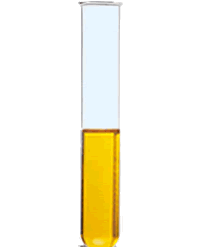
The colour is actually yellow due to the hydrolysis of the ion in water:
It is the
Pure iron(III) ions are actually pale violet. This is what they look like in the solid state:
 )
)
However, these colours will be masked when you carry out the reaction.
Potassium chromate(VI) is orange in colour and that's what you see before the reaction. These are converted to green
